
I've been in real estate for over a decade, and I can tell you that the way we find sellers has completely transformed. Just five years ago, I was spending my Saturday mornings knocking on doors in neighborhoods where homes had "For Sale" signs, hoping to catch homeowners who might be thinking about selling next.
Those days feel like ancient history now.
Today, I'm identifying likely to sell home leads before homeowners even call their first agent. The difference? AI-powered predictive analytics that can spot selling signals months in advance. But here's the question every agent is asking: does this new technology actually get you sellers faster than good old-fashioned prospecting?
I've tested both approaches extensively, and the results might surprise you.
The Traditional Prospecting Playbook (And Why It's Burning You Out)
Let me paint a picture of traditional prospecting that probably sounds familiar. You start your week with a list of expired listings, FSBO properties, and neighborhoods where you think people "might" be ready to sell. You spend hours researching each prospect manually, crafting personalized mailers, making cold calls, and knocking on doors.
I used to process about 20-30 leads per day using this approach. Each prospect required 30-60 minutes of research time. I'd look up property records, check recent sales in the area, and try to gauge whether someone was genuinely ready to list or just window shopping.
The conversion rate? About 9.3% of my outreach efforts led to actual seller meetings. That means for every 100 people I contacted, fewer than 10 would agree to discuss listing their home.
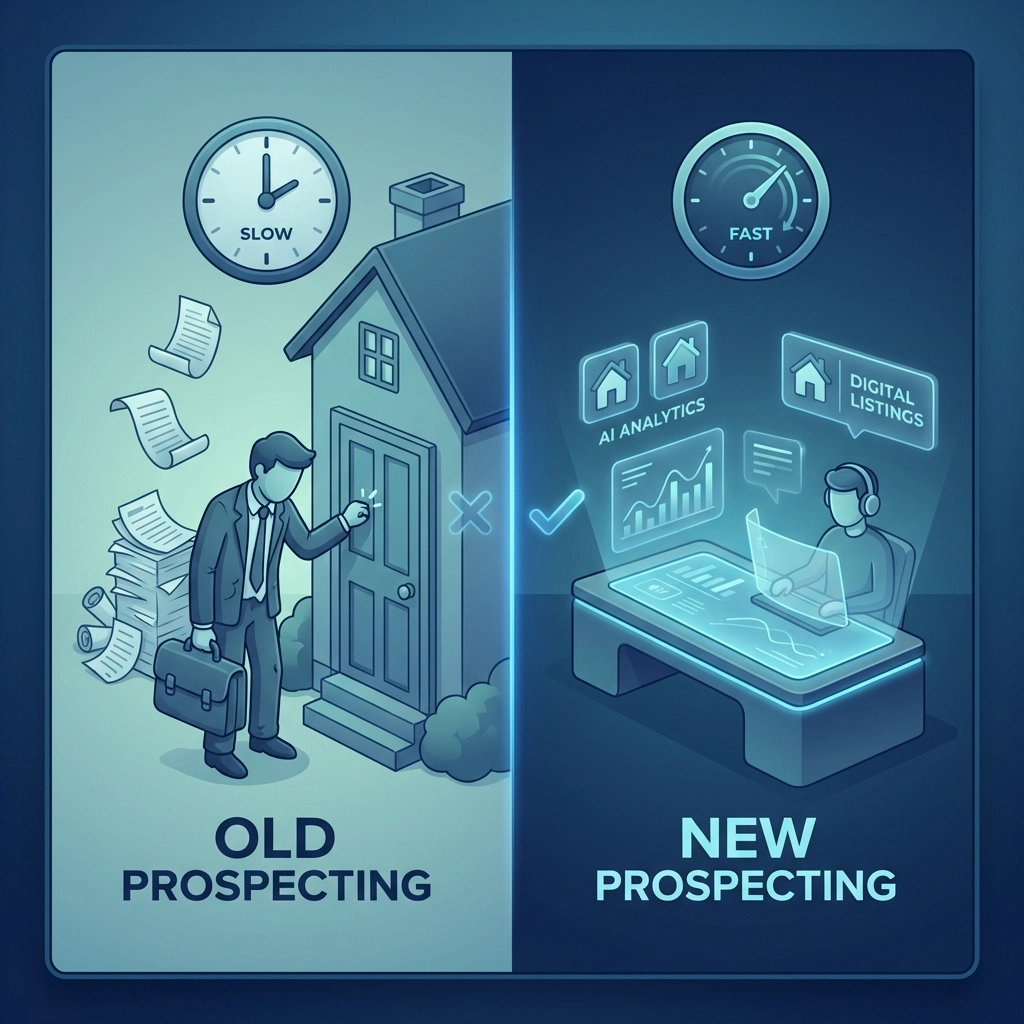
Here's what traditional prospecting looks like in practice:
Door Knocking and Cold Calling: You're operating on hunches and demographic assumptions. Maybe you target neighborhoods with older residents or areas with recent job growth. But you're essentially making educated guesses about who might sell.
Direct Mail Campaigns: You send postcards to entire zip codes, hoping someone happens to be thinking about selling when your mailer arrives. Response rates hover around 1-2% if you're lucky.
Expired and FSBO Follow-up: You compete with dozens of other agents contacting the same frustrated sellers. By the time you reach them, they're already overwhelmed with pitches.
The biggest problem with traditional methods isn't that they don't work – it's that they're incredibly time-intensive and rely heavily on timing luck.
How AI Lead Generation Changes Everything
When I first heard about AI tools for real estate agents, I was skeptical. How could software predict who's going to sell better than my years of market experience? But the data doesn't lie.
AI-powered real estate predictive analytics analyze thousands of data points simultaneously: property tax records, mortgage information, life event triggers, market conditions, and behavioral patterns. Instead of guessing who might sell, these systems identify homeowners showing multiple indicators of an upcoming move.
With Next List Ai's predictive seller leads software, I now process 100-150 qualified leads daily. The research time per prospect dropped from 30-60 minutes to just 5-10 minutes, because the AI has already analyzed property details, equity positions, and selling likelihood scores.

The conversion improvement was immediate. My lead-to-meeting rate jumped from 9.3% to 12.5% – a 35% increase in qualified appointments. More importantly, these weren't just any meetings. These were conversations with homeowners who were already 6-12 months into their selling decision process.
Here's what AI real estate lead generation looks like in action:
Predictive Scoring: The software identifies homeowners with high equity, life event triggers (job changes, divorces, retirement), and market timing indicators. Instead of cold outreach, you're connecting with people already considering a move.
Automated Research: Property values, neighborhood trends, and owner circumstances are compiled instantly. I walk into every conversation knowing the homeowner's situation and market position.
Timing Optimization: Rather than hoping your mailer arrives at the right moment, AI identifies when homeowners are actively researching agents and market conditions.
The Speed Showdown: Numbers Don't Lie
Let me break down the speed comparison with real numbers from my practice:
Traditional Prospecting Weekly Output:
- 50 prospects researched and contacted
- 150-300 hours of manual research time
- 4-5 qualified seller meetings scheduled
- 1-2 listings obtained
AI Lead Generation Weekly Output:
- 500+ prospects analyzed and prioritized
- 25-50 hours of focused outreach time
- 8-12 qualified seller meetings scheduled
- 3-4 listings obtained
The time savings alone are game-changing. I went from spending 80% of my week researching prospects to spending 80% of my time actually talking to qualified sellers.
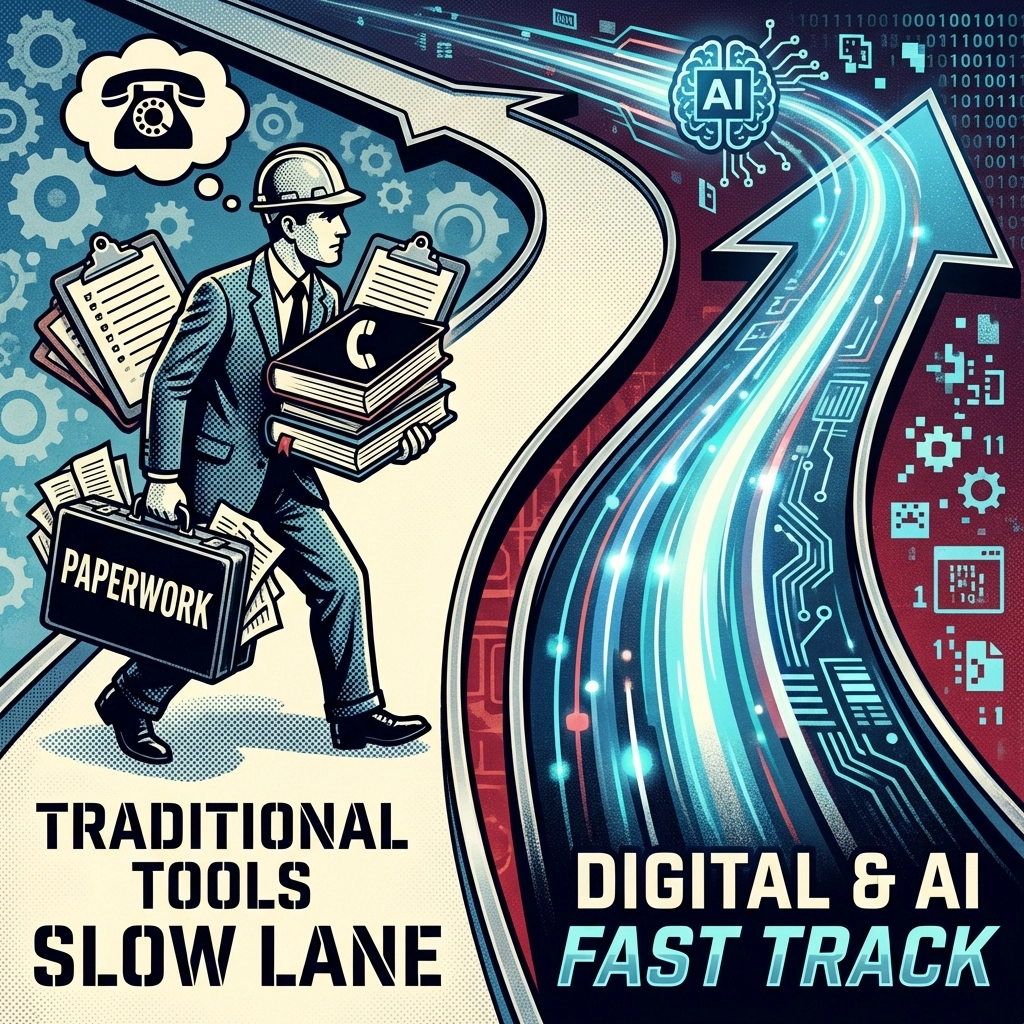
But speed isn't just about quantity – it's about quality and timing. Traditional prospecting often means reaching homeowners at random points in their selling timeline. AI predictive real estate leads connect you with sellers who are already 6-12 months into their decision process. You're not convincing someone to sell; you're positioning yourself as their agent when they're ready to list.
Real-World Results: Three Case Studies
Case Study 1: The Pre-Market Listing
Traditional approach would have missed this completely. AI identified a homeowner with recent job relocation signals and increasing online property research activity. I reached out before they contacted any other agents and secured an exclusive listing 30 days later. The property sold in 6 days for 8% above asking price.
Case Study 2: The Divorce Situation
Court records indicated a recent divorce filing. Traditional prospecting might have eventually found this through public records research, but AI flagged it immediately with additional context about property equity and timing. I approached sensitively and helped both parties navigate the sale smoothly.
Case Study 3: The Empty Nester
Demographic data suggested empty nesters, but AI identified specific behavioral triggers: increased research on retirement communities, adult children's recent home purchases, and property tax payment patterns. Instead of generic "thinking about downsizing?" outreach, I approached with specific market insights about their situation.
When Traditional Methods Still Matter
I don't want to completely dismiss traditional prospecting because there are situations where the personal touch remains irreplaceable. Complex family situations, luxury properties, and certain demographic groups still respond better to relationship-based approaches.
Traditional prospecting excels when:
- Building trust with high-net-worth sellers
- Navigating complex family dynamics
- Working in small communities where relationships matter more than data
- Handling properties with unique circumstances not reflected in typical datasets
The most successful agents I know use a hybrid approach: AI for large-scale lead identification and traditional relationship-building for high-touch situations.

Making the Switch: What to Expect
If you're considering adding AI lead generation to your prospecting mix, here's what the transition looks like:
Week 1-2: Learning the platform and understanding predictive scoring. You'll feel overwhelmed by the volume of data initially.
Week 3-4: Developing outreach scripts tailored to AI-identified triggers. Your conversion rates will start improving as you learn to speak to specific motivations.
Month 2-3: Refined targeting and messaging. You'll see the time savings compound as your research becomes more efficient.
Month 4+: Predictable lead flow and higher closing rates. This is when AI prospecting becomes your primary seller lead generation method.
The Verdict: Speed, Scale, and Success
After using both approaches extensively, AI lead generation wins on speed by a significant margin. The ability to identify, research, and prioritize hundreds of prospects daily while maintaining higher conversion rates makes it the clear choice for agents who want to scale their seller lead generation.
But here's the key insight: the fastest results come from using AI to identify the right prospects and traditional relationship-building skills to convert them. Technology handles the heavy lifting of research and identification, while your expertise closes the deals.
The real estate industry is evolving rapidly, and agents who combine AI efficiency with human relationship skills are capturing the most market share. The question isn't whether to adopt AI tools for real estate agents – it's how quickly you can integrate them into your existing systems.
If you're ready to experience predictive real estate leads firsthand, start with a data sample to see how AI can identify sellers in your market before they contact other agents.